
Culture — Dominoes
Dominoes: The National Pastime
If you spend any time in the Dominican Republic, you will hear dominoes before you see them — the sharp crack of tiles hitting a table, the raised voices, the laughter. Dominoes is not just a game here. It is a social institution, played by all ages, in every neighborhood, at any hour.
Understanding what you are watching — and knowing how to respectfully join in — is one of the best ways to connect with Dominican culture as a visitor.
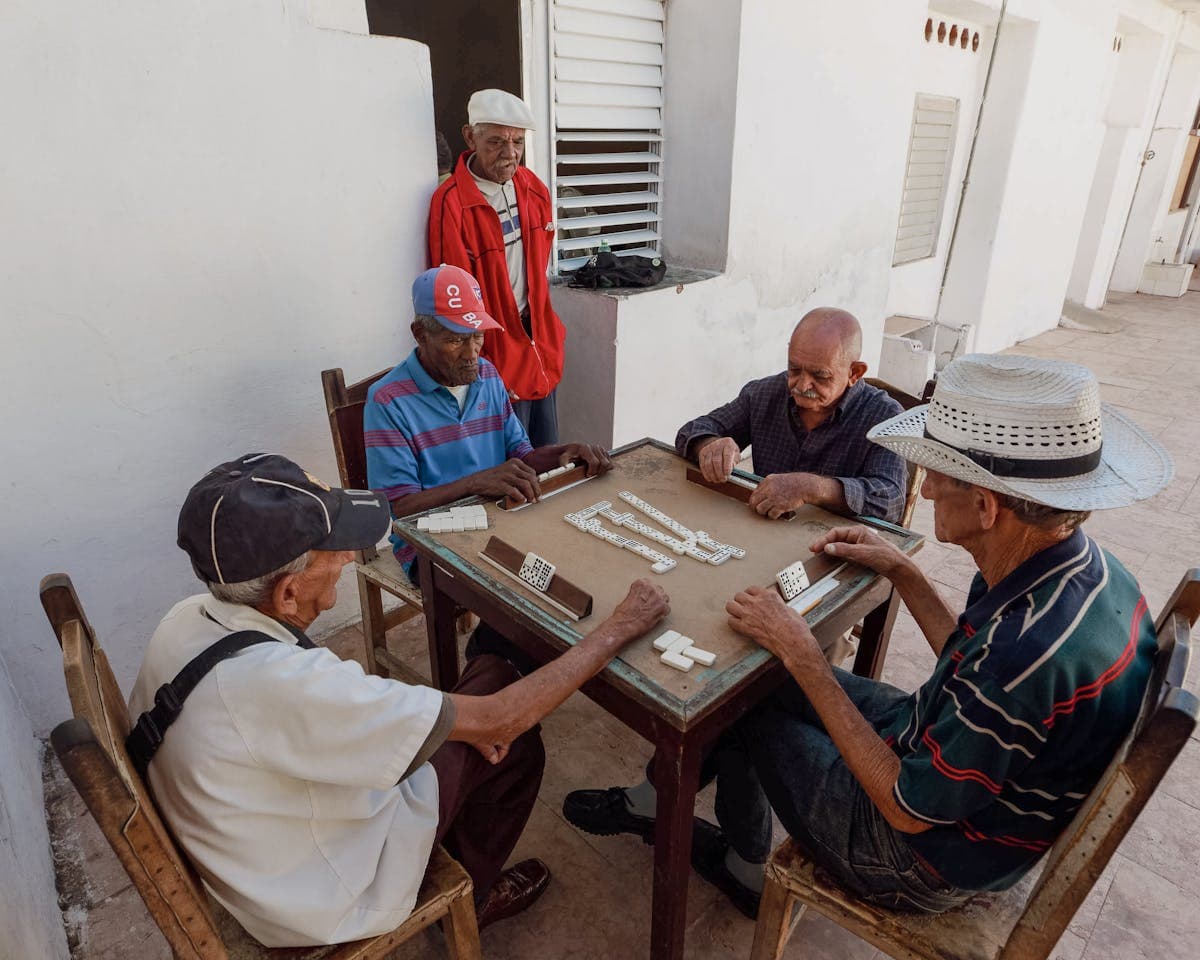
Photo: Mehmet Turgut Kirkgoz / Pexels
How it is played in the DR
The standard Dominican game uses a double-six set — 28 tiles total, with pip values from 0 to 6. Four players sit in two teams of two, partners facing each other across the table.
The pace is fast. Players read the board quickly and play decisively. Hesitation is unusual. Conversation, commentary, and good-natured argument happen simultaneously with the game — it is part of the experience, not a distraction from it.
Slamming tiles when playing a strong move is a signature part of Dominican dominoes. The harder the slam, the more confident the player. The table shaking is a feature, not a problem.
The social context
Games happen at colmados — the corner stores that serve as the social hub of every Dominican neighborhood. A colmado typically has a few plastic chairs outside, cold Presidentes in the fridge, and a domino table that sees continuous action on weekends and evenings.
You will also find games in front yards, in parks, under trees, and outside barbershops. The setting is always communal. Spectators gather, offer unsolicited advice, and celebrate good plays. Children watch and learn. Elders play with decades of strategy behind every tile.
It is a gathering, not just a game.
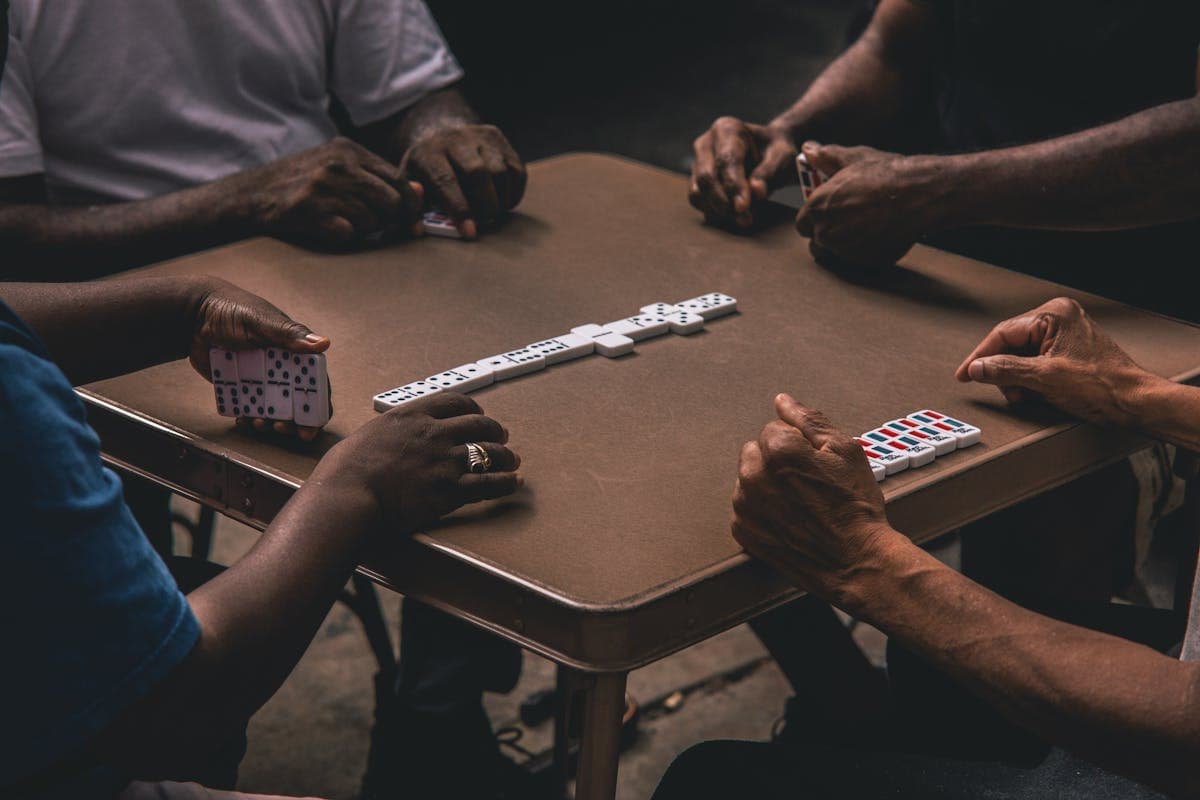
Photo: Craig Adderley / Pexels
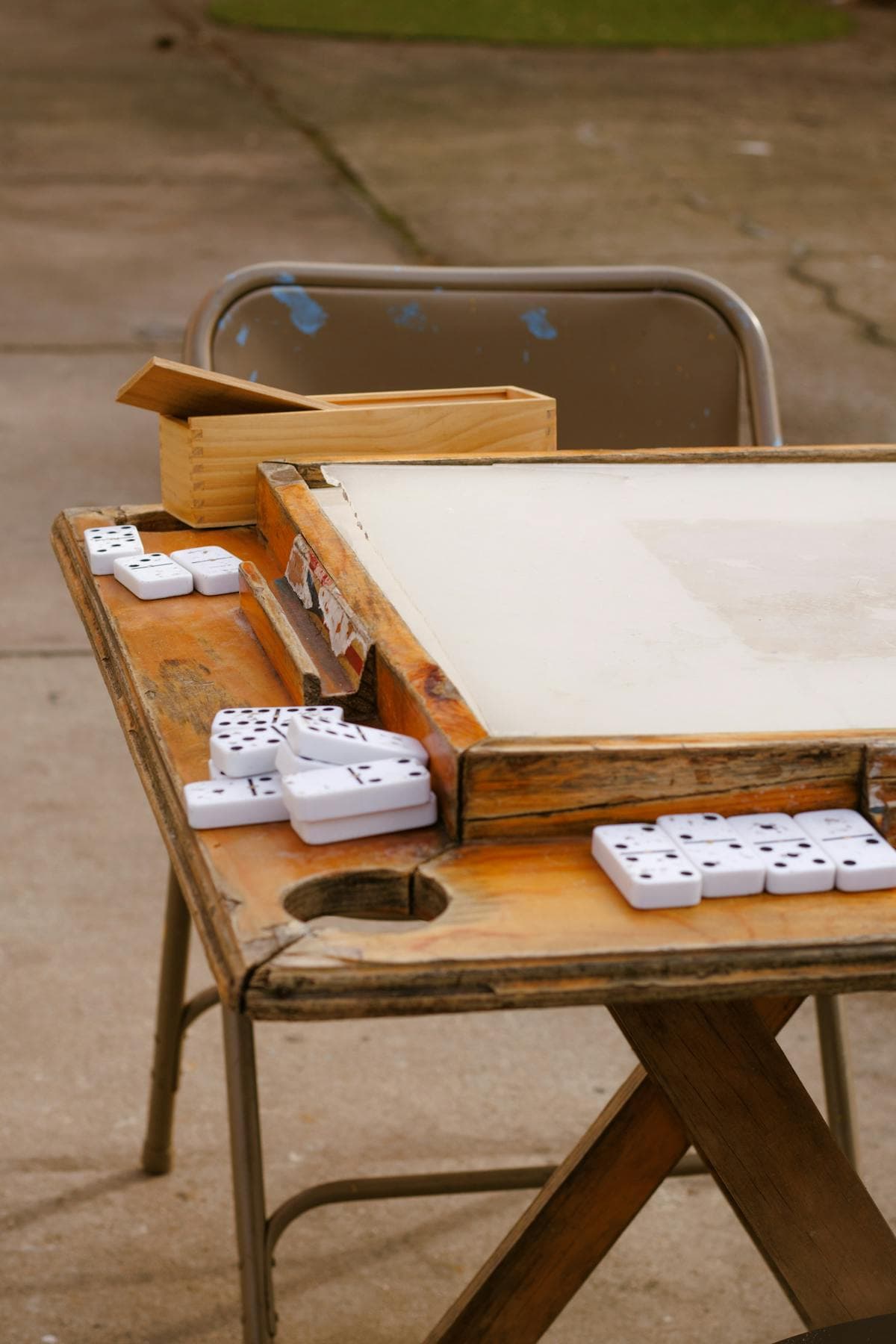
Photo: Priscila Almeida / Pexels
Rules overview (simplified)
- 28 tiles in a double-six set, each with two ends showing pip values from 0 to 6.
- Each player draws 7 tiles at the start. The player with the highest double plays first.
- Players take turns matching the open ends of the chain. If you cannot play, you pass.
- A round ends when one player plays their last tile ("dominoes"), or when the board is blocked.
- The winning team scores points based on the pip total of the losing team's remaining tiles.
- Games are typically played to 100 or 200 points over multiple rounds.
Local variations exist. The rules above reflect the most common format played across the DR.
Visitor etiquette
Ask before joining
A game in progress is a serious affair. Watch first, make eye contact, and wait to be invited or ask respectfully.
Do not play slowly
Thinking too long between turns disrupts the rhythm and will earn you disapproving looks. If you are learning, say so upfront.
Trash talk is part of the game
Loud commentary, teasing, and banter are completely normal and expected. It is friendly. Laughing along is the right response.
Slamming tiles is intentional
When a player places a tile hard on the table, it is a gesture of confidence or triumph — not aggression. Do not be startled.
Respect the local house rules
Variations in rules exist from region to region and table to table. If unsure, ask before the game starts.
Where to watch and play
Any colmado on a weekend afternoon is your best starting point. Walk through any residential neighborhood, listen for the sound, and follow it. Weekend afternoons are the peak hours — the games get longer, the stakes get higher, and the crowd gets louder.
You do not need to play to enjoy it. Watching a highly contested game is entertainment in itself.
Fun fact
The Dominican Republic has produced multiple international dominoes champions. The game is taken seriously at every level — from the table outside the corner store to formal national competitions. Pride in the game runs deep.